
How does the collaboration work?
Let’s start from the beginning.
I usually receive a short description of the book and its page count. This is sufficient information to provide an approximate turnaround time, amount of work and price range, but I prefer to familiarize myself with the text of the book. This way I know exactly what your story is about, whether it’s within my comfort zone, whether I like it, and whether I’ll have a lot of fun illustrating it. This is important and allows the illustrator to familiarize themselves with and connect with your story.
Once I receive the manuscript and know how many pages the book will have, I send a price proposal with a price range for small, medium, large, and very large details. Very large details work well in picture books without text, search engines, and puzzles. Standard children’s books don’t require a lot of detail. I usually illustrate books with medium and large details, but sometimes a small amount of detail is sufficient.
I also check my availability and provide an estimated turnaround time. Importantly, the turnaround time may be delayed by a week or two because it’s difficult to plan work precisely to the day. I’m usually booked for upcoming dates, so I won’t be able to start working on your book until tomorrow or next week. Please inquire about current availability, and I’ll be happy to respond.
When you send your manuscript, you can add your notes (or brief) to the text, along with descriptions of each scene. This helps if you want me to draw something based on your idea. This kind of brief allows you to influence what I draw in each scene, but I need to review it beforehand, even at the pricing stage. Why? I once had a situation where the book was 28 pages long and the text was excellent, but the brief was 220 pages long and described everything, including what was to be included on the third plan.
I don’t mind illustrating according to the author’s brief and vision, but I like to have space for my own ideas, so descriptions should be short and include room for my initiative and concept.
If the author or publisher accepts the deadline and chooses a suitable quote, I send a blank contract template.
Once the author provides their details and is committed, I send the final version of the contract, which we then sign together.
I transfer full copyright and do not collect royalties. I only collect a one-time fee. It’s more convenient for me not to have to worry about deadlines, settlements, and paperwork. The author has greater freedom and doesn’t have to ask the illustrator for anything; they can use the illustrations however they want.
After signing the contract, I need to receive a deposit to reserve a completion date.
I don’t charge the full fee upfront. I work in stages, and payments are also made in stages.
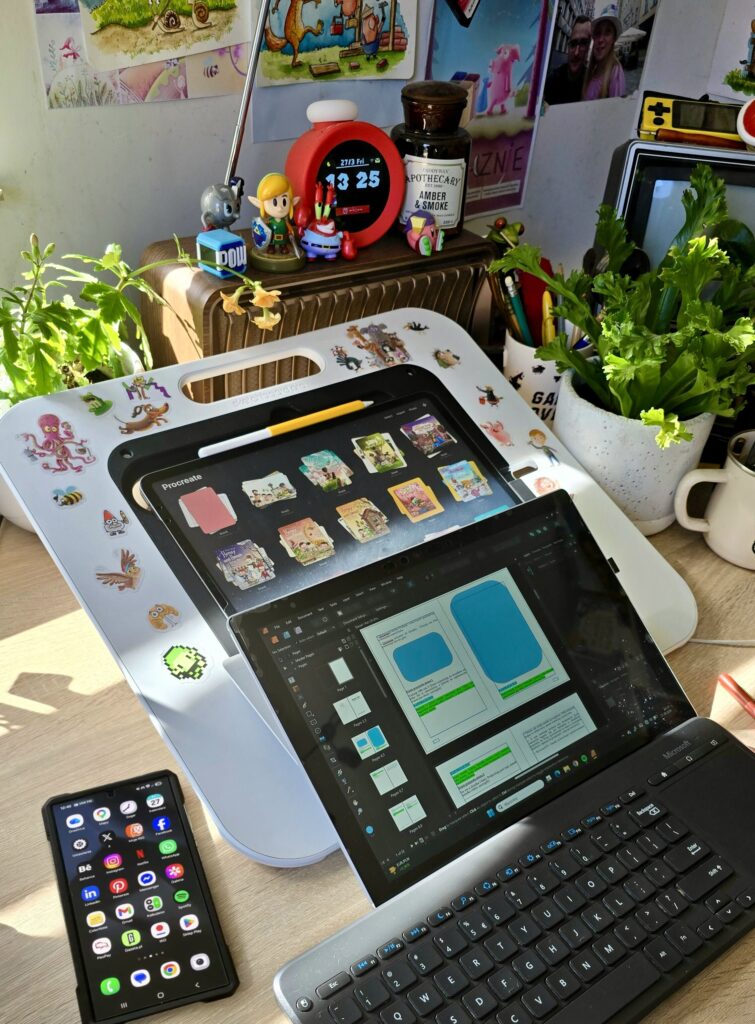
I always start by laying out the text and creating a layout with spaces for illustrations. At this stage, you know how the pages will be arranged and how the text will be divided.
Before I can begin, you need to provide the book format. Depending on your choice and the printer, this can be portrait, square, or landscape. Books typically measure 8.5 x 8.5 inches, but not limited to this.
The following are typical dimensions:
Board Books: 6 x 6 or 7 x 7 inches. Picture Books: 8 × 8 or 8.5 × 8.5 inches (square), 8 × 10 or 8.5 × 11 inches (portrait), and 10 × 8 inches (landscape).
Early Readers: 6 × 9 or 5.5 × 8.5 inches.
Chapter Books: 5.25 × 7.5 or 6 × 9
Once I’ve finished creating the layout with the text, I begin creating quick sketches and drafts.
I create each sketch based on the book’s text. I work my way through and create each scene myself, but if you want me to use your ideas, you must send me a brief with a description of the scenes or characters. I just ask that it not be too detailed or too elaborate. You can include reference photos if you’d like.
When I create sketches, I start with sketches of the main characters. Sometimes, an author wants me to create a character design as a sample before I start working on the entire book. This is understandable, and I often work this way. When the sketches are ready, I send them to the author and make any necessary corrections. After approval, I move on to the next stage.
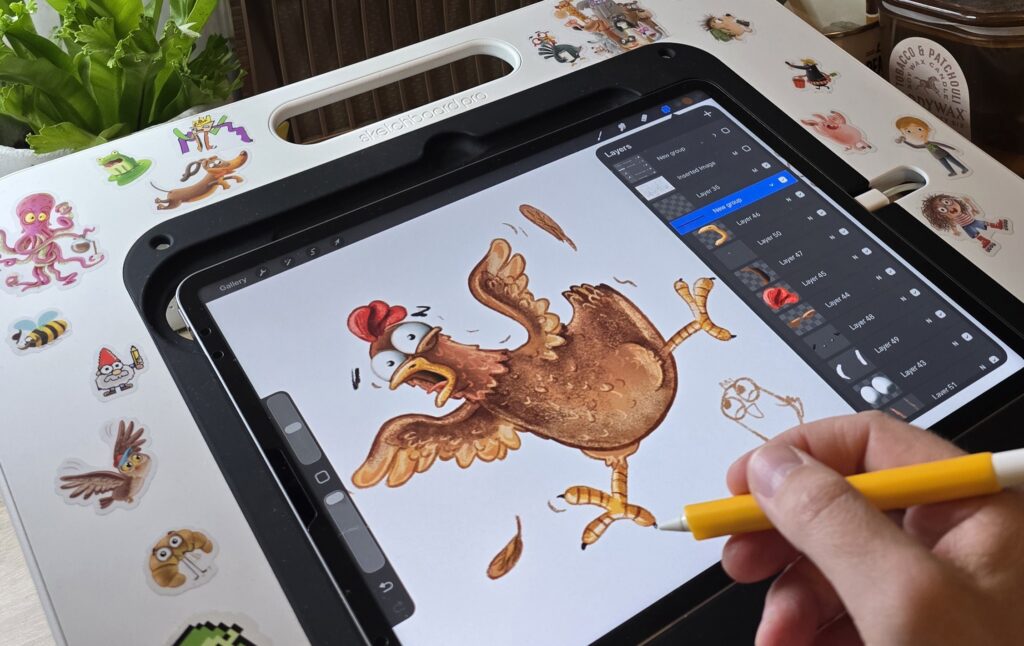
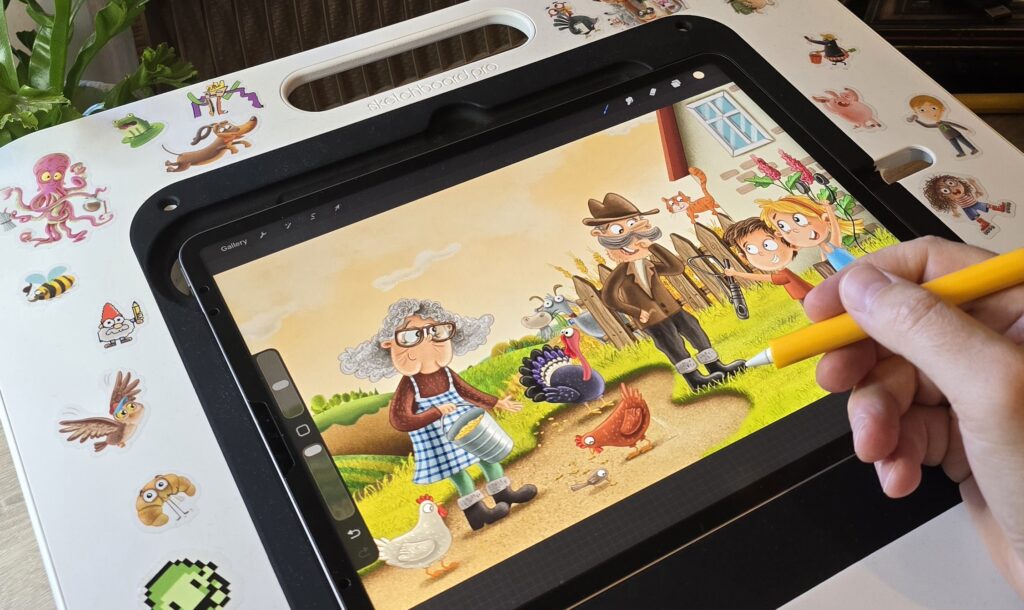
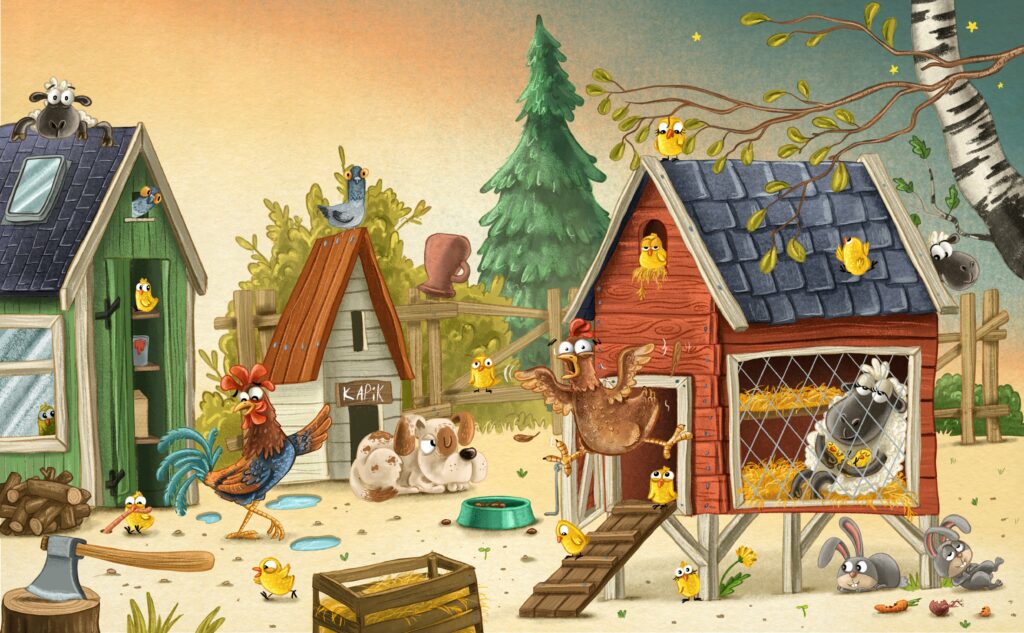
Once the sketches for the first pages are ready, I begin coloring. Once I’m finished coloring, I can’t change the illustration or redraw it, but I can add, move, or replace anything.
During work, I send daily updates and upload my progress directly to the project cloud, so you can see the project growing and new illustrations, sketches, or quick sketches being created every day.
When I finish working on the illustrations for the book’s interior, I create the cover, title page, and endpaper. This is the best time to create the cover because I already have a database of ideas and have read your book many times. I avoid creating covers at the beginning of the book unless I need to create the cover itself, and even then, I read the text several times to choose the best idea.
Once I’ve finished working on the illustrations, the entire project is stored in the cloud, and you can download it in full or in part for a year. I clean up my hard drive and archive the files annually, so don’t worry if you overlook anything, these files won’t disappear.
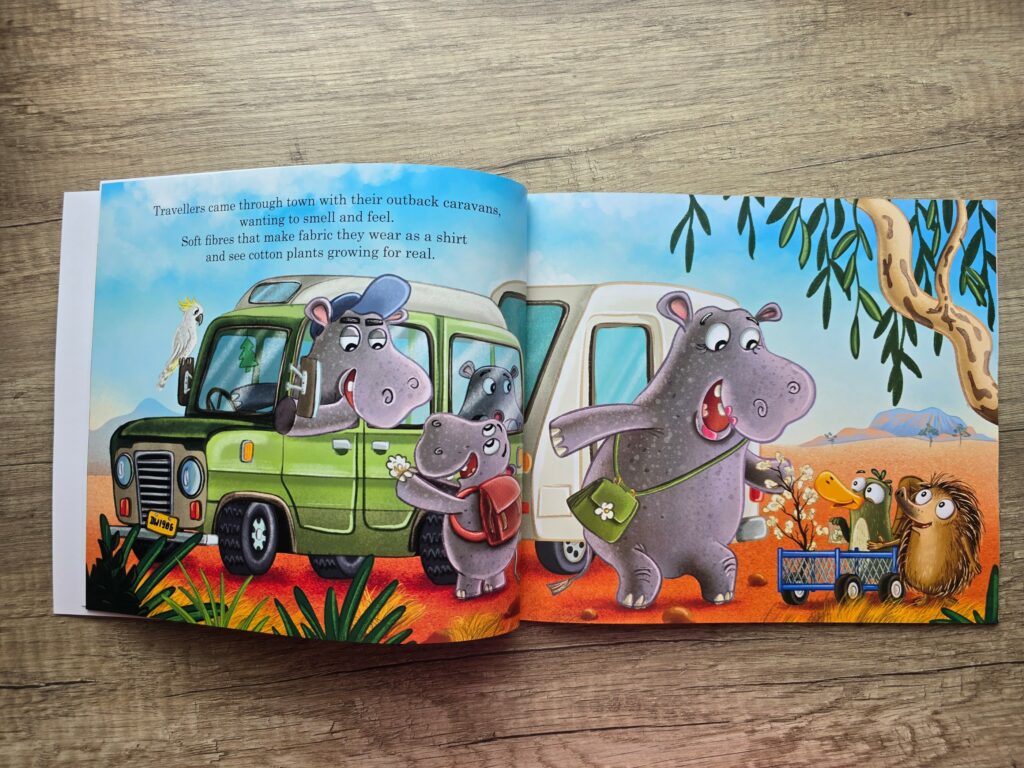
I create the illustrations, cover, promotional materials, and also prepare the initial text layout, including initial font selection and text placement on the pages. This is convenient because it allows the illustrations to better fit the text and the text fit to the illustrations.
The files you receive are files with illustrations without text on the page in PNG format, and files with text on the page in PNG format. If you’d like, I can prepare PDF files with an editable text layer. This will help the editor review the book’s text before final typesetting and preparing the book for printing.
The finished illustrations are in PNG format, so you can share them on your social media. I also create marketing materials in unusual sizes that are perfect for Instagram, so you can share them on your profile as well. I share my daily progress and work-in-progress on Instagram stories, so you can stay up to date and see what I’m currently working on.
I think that’s all, but if I haven’t covered anything or you’d like to learn more, send me a DM.